Atlanta College of Liberal Arts and Sciences is an online university offering quality education worldwide.

Elevate your programming skills by mastering how computer hardware, operating systems, and compilers interact behind the scenes. This course bridges the gap between high-level application development and low-level hardware execution, turning you into a rare, systems-aware power programmer.
Computer Systems: A Programmer's Perspective
About This Course
Welcome to this online video course on Computer Systems: A Programmer’s Perspective, designed to demystify exactly what happens "under the hood" when your programs run. While traditional computer systems courses focus primarily on how to build hardware or design operating systems, this course takes a unique, application-driven approach. Written entirely from a programmer's perspective, we explore how your software interacts with the compiler, the operating system, and the physical hardware. By understanding the underlying mechanics of execution, representation, and communication, you will gain the power to write code that is significantly faster, more reliable, and inherently secure.
What You Will Learn
Through structured video lectures and practical, hands-on insights, you will master the foundational layers of modern computer systems. Key topics include:
Why Take This Course?
In modern software development, relying solely on high-level abstractions is no longer enough to build cutting-edge applications. This course will elevate you into a rare power programmer who truly understands how computers execute code. You will acquire the systemic intuition needed to diagnose mysterious runtime bugs, close dangerous security gaps, and optimize programs for peak hardware efficiency. Ultimately, this course serves as an essential bridge, giving you the confidence to dive into advanced fields like compilers, computer architecture, cybersecurity, and operating systems.
Who Should Take This Course?
This course is designed for computer science and computer engineering students, self-taught developers, and software professionals looking to deepen their systems knowledge.
Every single course certificate issued by Atlanta College of Liberal Arts and Sciences (ACLAS) is verifiable via our digital registry and is eligible for institutional authentication (Apostille/IECC), ensuring your professional milestones are recognized globally as of 2026.
Dive into the world of problem-solving with our comprehensive course. Explore the art and science of tackling challenges, making informed decisions, and crafting effective solutions. Perfect for individuals seeking to enhance their personal and professional growth.
In this course, you will learn the most important skills and most applicable tools of successful business communication in a fast and efficient way.
Gain a comprehensive understanding of essential financial concepts with the Financial Concepts Course. This transformative program equips participants with the knowledge and skills to make informed decisions in personal and professional financial settings. From risk assessment to investment analysis, explore the tools and strategies that shape financial decision-making.
In this course, you will learn the most important skills and the most applicable tools for a successful strategic operations strategy in a quick and effective way.
This course offers a comprehensive introduction to database engineering, covering fundamental concepts like data storage, relationships, SQL operations, and database normalization. Participants will gain hands-on experience by building a fully operational database and using tools like XAMPP to manage databases locally and remotely.

Master the fundamentals of computer security, from authentication to network defense. This course covers essential topics such as security threats, vulnerabilities, network security protocols, and cryptography.
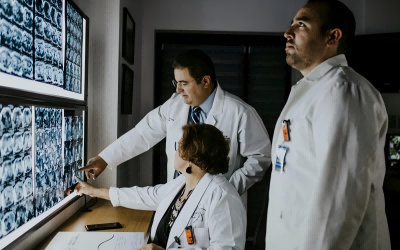
Discover how deep learning can revolutionize healthcare. This course covers essential topics such as health data standards, neural networks, predictive models, and the application of deep learning techniques to healthcare data.
Master the fundamentals and practical applications of machine learning in this hands-on course. From regression techniques to neural networks and model evaluation, learn how to build and optimize machine learning models using real-world datasets.